AI and Marketing: The Real Pros, the Real Cons
If you’ve been online for five minutes, you’ve seen the AI hot takes. It’s either going to replace everyone, or it’s going to ruin everything. I don’t really buy either story. I use AI daily, but I’m not pro-AI or anti-AI, I’m pro reality. AI is a tool, a fast one, and it can make a lot of marketing tasks easier. But marketing is still about attention, and attention usually comes from originality, specificity, and a point of view, which is not exactly how AI is built. Plus, everybody has it now, so it’s not some “advanced marketer” badge anymore, it’s just how work gets done.
ChatGPT hit the mainstream on November 30, 2022, and it’s now 2026. We’ve seen real improvements, but we haven’t seen the great marketer extinction event that was once predicted.
AI will never naturally keep up with where your business is right now without you feeding it context, and that’s the part people gloss over. Your bottleneck changes. One month you need more leads, the next month you need better lead quality, then you realize the real problem is follow-up speed, or your sales team is getting the same objection on every call, or the offer is unclear, or your reviews are stale. A strategic marketer can spot where the pipeline is leaking and decide what actually matters next. AI can give you parts, headlines, outlines, email drafts, ad variations, a hundred “ideas.” But it doesn’t give you strategy. Strategy is choosing what to say, who to say it to, what to ignore, and what has to be true inside the business for the marketing to work.
What follows is the pros and cons of AI in marketing.
The pros: where AI genuinely helps
The honest best-case use of AI is speed and momentum. It helps you get unstuck, get organized, and get more reps without hiring three more people.
AI saves time. It can knock out first drafts, social captions, blog outlines, ad copy variations, email subject lines, campaign ideas, FAQs, and repurposing long-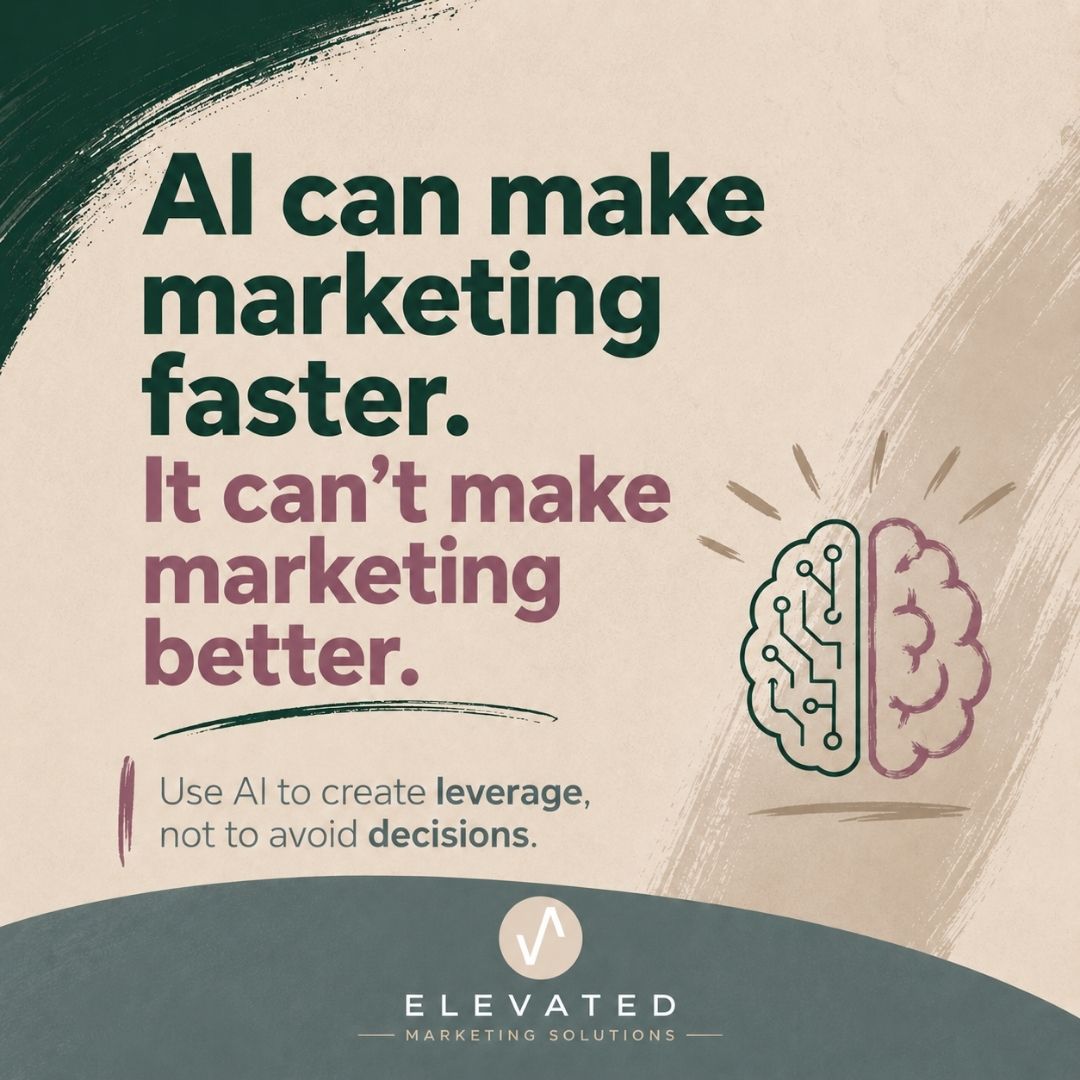 form content. For small businesses, that’s not a nice-to-have, it’s often the only way marketing stays on the calendar when things get busy.
It lowers the barrier to consistency. A lot of businesses do not market because they do not know what to say. AI can give you a starting point, and sometimes that’s all you need to go from “stuck” to “published.”
It generates more ideas than you would on your own. It’s great for brainstorming angles, campaign themes, blog topics, objections, customer pain points, and ways to explain a service. Used well, it makes you think more deeply, it doesn’t just crank out noise.
It personalizes faster across audiences. If you sell a service that touches multiple decision-makers, you already know the message cannot stay the same. AI can help you adapt the framing for a homeowner versus an office manager versus an HR director, without rebuilding everything from scratch.
It can improve reporting and analysis efficiency. AI is useful for summarizing analytics, spotting patterns, and turning “numbers” into plain-English takeaways your team can actually act on. McKinsey’s 2025 State of AI survey reports that revenue increases from AI use are most commonly reported in use cases within marketing and sales. (McKinsey & Company)
It makes small teams more capable. You can stretch capacity with research, drafts, content calendars, competitive reviews, SEO outlines, ad variations, and clearer internal communication. That is a real advantage for small teams, even if AI itself is not a “secret weapon” anymore.
It speeds up testing. AI can quickly create multiple versions of headlines, calls to action, email subject lines, landing page sections, or ad copy, which gives you more to test instead of betting everything on one idea.
The cons: where AI quietly hurts your marketing
This is the part you feel six months later when you look back and realize you’ve been “doing content,” but you sound like everyone else.
AI can make your marketing sound generic. It often produces content that looks polished but could apply to almost any business, which strips out personality, specificity, and point of view. There’s growing coverage of how AI-generated ads can start blending together when brands use AI as a shortcut instead of a support tool.
It does not truly understand your business. It does not automatically know your customers, your market, your local reputation, your sales process, what your team is great at, or what actually makes people choose you. It can guess, but it needs human strategy and context to land the right message.
It can be confidently wrong. AI can make up facts, misinterpret data, overstate claims, or recommend tactics that do not fit your industry. If accuracy matters, AI output always needs a human truth check.
It can create a lot of content with no real strategy. More posts do not equal better marketing. You can end up with blogs, emails, and ads that are active but not aligned with a clear goal, audience, offer, or conversion path. More AI generate content without strategy, editing and real life stories will fall flat with your potential clients and with SEO/AEO. The advantage of producing content fast, turns out to just also fall inot the category of a disadvantage. It’s bland, borign and easily copied.
It may weaken brand trust. If your content feels robotic, inaccurate, repetitive, or disconnected from the real customer experience, people sense it. AI can help you communicate faster, but it can also make your brand feel less human. Even further damaging is when your consumer notices your using AI content, we all have seen the backlash. While using AI is definitely not inherently wrong, AI slop or content not reviewed is.
It depends heavily on data quality. If your tracking, CRM, analytics, or customer data is messy, AI can make poor recommendations based on bad inputs. That’s one of the easiest ways to waste time and money with AI-driven “personalization.
It can create sameness across competitors. If businesses in the same industry ask AI the same questions, they will publish similar blogs, captions, ad headlines, and email campaigns. Marketing is supposed to help you stand out, not blend in.
It still needs human judgment. AI can suggest what to do, but a strategist still has to decide whether the idea is right for your audience, your brand, your timing, your budget, and your actual business goal.
Content production is not the same thing as campaign operations
This is where a lot of the “AI can replace marketing” talk breaks down.
AI can help you produce the pieces, captions, drafts, headlines, subject lines, outlines, ad variations. That’s content production. Campaign operations is everything required to make that content actually perform: what offer it points to, what landing page it drives, what tracking is in place, what happens when leads come in, how follow-up works, what gets measured weekly, and what changes when results are not there yet.
Most marketing doesn’t fail because you couldn’t write. It fails because the system around the writing is leaky, inconsistent, or never gets adjusted once reality shows up.
Who’s accountable when it doesn’t work?
Here’s the uncomfortable question, and it’s one you should ask before you decide “AI can do this instead of hiring someone.”
If AI is doing all your marketing and it’s not working, who are you holding accountable? The answer is not “the AI.” It’s whoever set it up, whoever wrote the prompts, whoever decided what the strategy was, and whoever did or did not adjust when the market shifted.
 And that ties into another assumption people make without realizing it: the idea that marketing never changes. Like you can put it on a conveyor belt, keep producing, and it’ll keep working. That’s not how this goes. Marketing changes constantly. Tactics shift, platforms shift, competition shifts, and people’s attention shifts. Culture shifts. What worked six months ago might be stale today. AI needs good instructions, and those instructions need to evolve, because the game evolves. The value of a real marketer isn’t just output, it’s that someone is driving the loop: setting goals, owning a plan, reading what’s happening in the real world, and making the next adjustment.
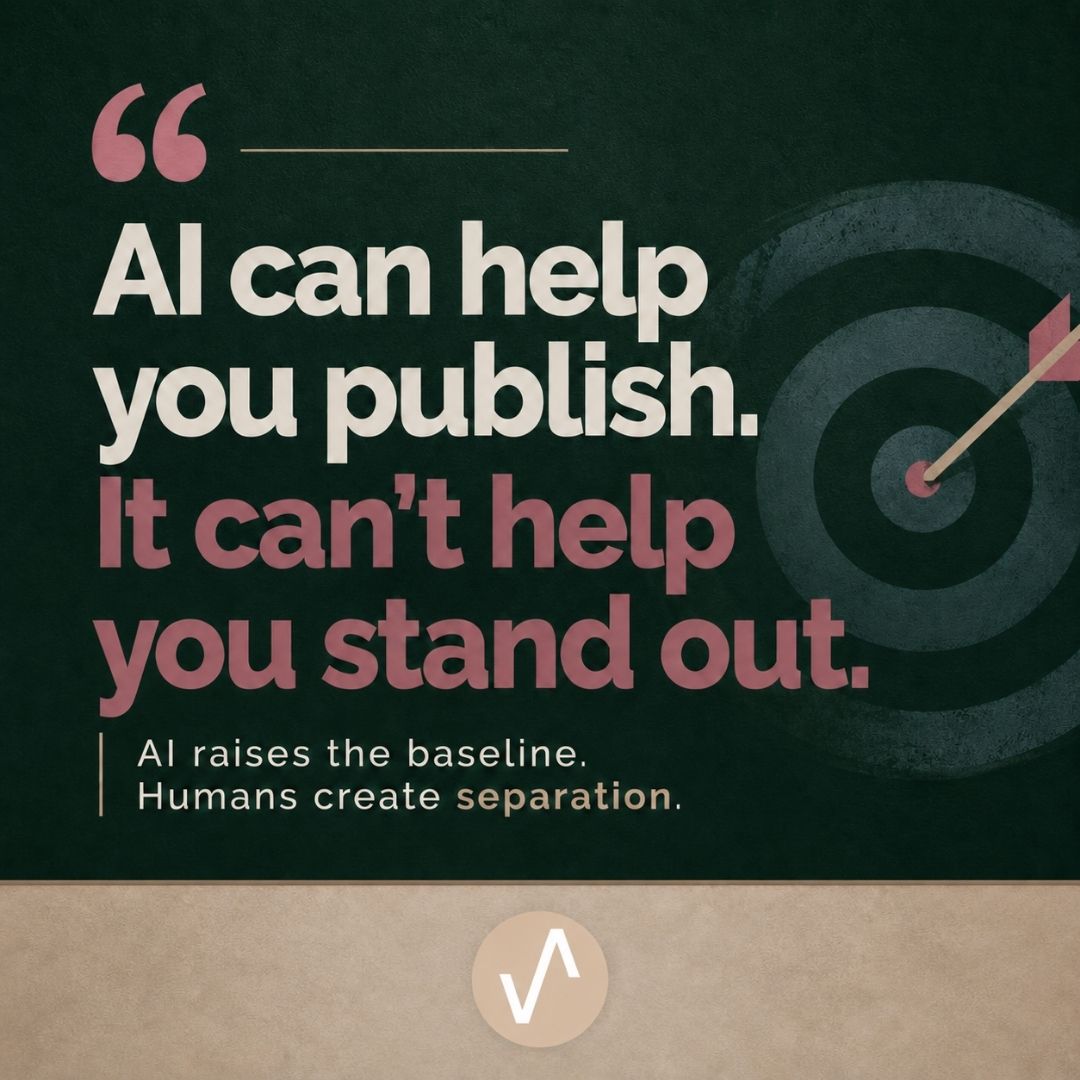
AI raises the baseline, humans create separation
AI makes it easier for everyone to produce “pretty good” marketing. That’s the new baseline. The downside is that “pretty good” starts to look and sound the same across your entire industry.
Separation still comes from human stuff: real customer insight, actual positioning, a point of view, a message that only makes sense coming from you, and the judgment to choose what not to say. AI can help you move faster, but it won’t reliably make you different.
AI can make marketing faster. It cannot automatically make marketing better.
Better marketing still requires strategy, customer insight, brand voice, creative judgment, and accurate data. AI can absolutely support those things, but it should not replace them. For most businesses, it’s a very fast assistant, not the marketing director.
Where AI should help, and where it should not replace humans
Use AI aggressively for production support, and keep the high-trust decisions human.
- Where AI should help: brainstorming content ideas, drafting first versions, repurposing podcasts, videos, or blogs, creating email subject line options, summarizing analytics, researching audience questions, building content calendars, generating ad copy variations, creating FAQ ideas, turning messy thoughts into clearer messaging.
- Where AI should not fully replace humans: brand positioning, core messaging, customer research, final copy approval, marketing strategy, campaign direction, budget decisions, reputation-sensitive communication, crisis communication, client relationship management, creative direction.
Let’s clear up the obvious questions
“If everyone has AI, how do you stand out now?”
You stand out the same way you always did: you get more specific, more honest, and more aligned to what your customers actually need. AI can speed up output, but it can’t hand you a point of view. That part is still you.
“What’s the fastest way to make AI output not sound generic?”
Stop asking for “a post about X” and start feeding it reality: the objections you hear on calls, the questions customers ask before they buy, the constraints in your industry, the real differentiator you can prove, and the exact next step you want the reader to take. AI gets better when your inputs get better.
“Are we really going to stop needing marketers?”
Not in the way people mean it. Four years after ChatGPT’s public release, we’re not in a marketer-free utopia, we’re in a world where the work shifts and smaller teams can do more. The differentiator is judgment, and the ability to connect business reality to marketing decisions.
“What does an agency do that AI can’t?”
AI can generate a lot of marketing parts. An agency, or any truly strategic human, should be doing the unsexy work that makes the parts matter: diagnosing where you’re stuck, deciding what to prioritize next, shaping your positioning, aligning your messaging to the real sales process, building campaigns that connect channels, and then watching performance and making adjustments when the market changes.
If you’re paying for anything, you’re paying for judgment, alignment, and accountability, not just words on a page.
A practical next step
If you take one thing from this, let it be this: AI is great at producing the pieces, but it will never own the outcome unless a human owns the plan. You can absolutely use AI to move faster, draft more, and test more, but you still need someone who can look at the business, spot what’s actually broken, and decide what to do next when the market shifts, the pipeline gets weird, or the results don’t show up on schedule. So use AI, lean on it for speed, but don’t confuse output with progress. Progress comes from strategy, iteration, and accountability, and that’s still human work.