


Marketing Solutions for Janitorial Services
When American Facility Care first partnered with us, their digital presence needed updates across multiple platforms. Initially, we focused on enhancing their website to improve user experience and engagement. Our next steps involved expanding their reach through comprehensive social media marketing and implementing advanced technical SEO strategies to boost organic visibility.
As the partnership evolved, we began creating content based on deep research and insights gathered from podcasts produced by the company. This content strategy helped establish American Facility Care as a thought leader in the janitorial services space. To complement this, we executed targeted Google Ads and social media campaigns, specifically crafted to attract an audience interested in professional janitorial services.
Additionally, we developed an email marketing campaign that aimed to grow their subscriber list through strategic efforts on both their website and social media platforms. The combined approach of paid ads, SEO, and content creation significantly increased website traffic and customer engagement, solidifying their online presence.


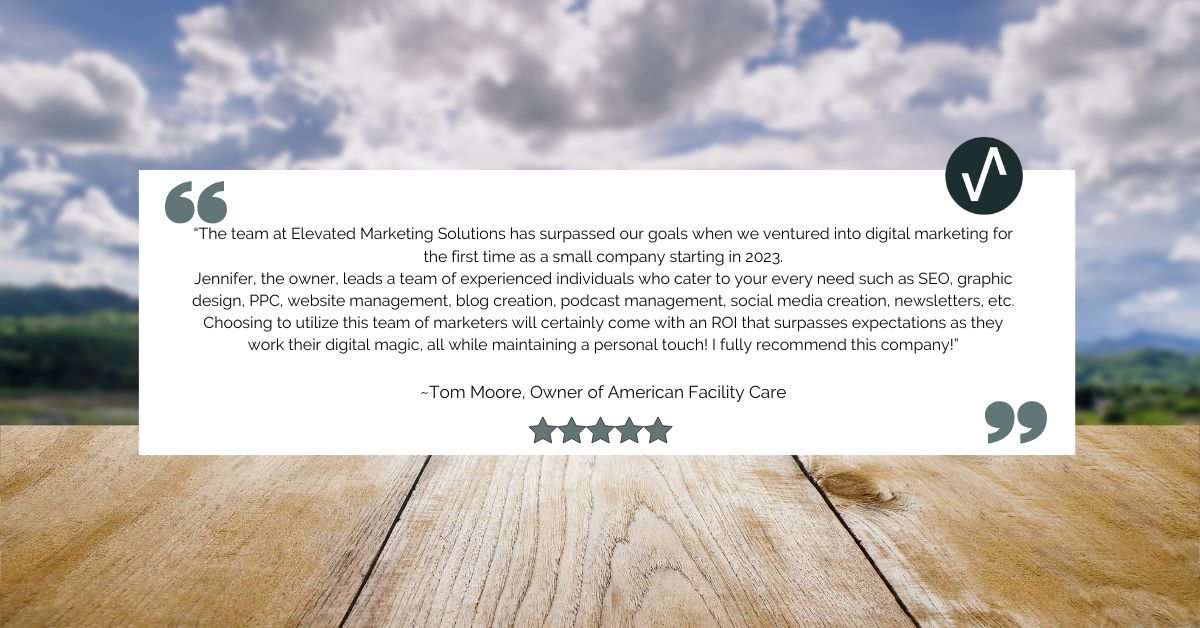
What Our Client Thinks:
Results:
- Facebook is top website traffic source. Recent gains: +372% reach, +867% reel engagement, +317% page visits. It’s the most reliable visibility engine.
- 3,000% increase in “quality” traffic (users spending over 30 seconds) since launching Google Ads.
- Personal LinkedIn reach up 31.1%, helping build trust and visibility with decision-makers
- Started with 128 keywords in early 2023, now ranking for over 200 keywords, showing strong organic expansion
- Top rankings for keywords like:
“School disinfection services”
“Church janitorial services”
“School disinfection services”
“Warehouse cleaning service”
“Commercial cleaning near me”
“Nightly janitorial services”
We know Janitorial Services and Marketing As the seasons change, the needs of your commercial cleaning clients shift right along with them. Spring brings deep-cleaning demands and post-winter refreshes. Summer brings foot traffic increases, especially in schools, entertainment venues, and retail spaces. Fall is the prime time for facility managers to evaluate vendor performance and lock in next year’s service contracts. Winter presents opportunities for cold and flu prevention marketing, snow-and-salt mitigation, and showing how your services keep buildings functional even in harsh conditions. Understanding this cycle is the key to staying ahead of your competition and keeping your calendar full.
Here is what your buying cycle looks like:
Total Buying Cycle Duration
Average Time: From awareness to contract signing, commercial janitorial services typically follow a 4–8 week cycle, but larger institutions may require 3–6 months for procurement.
Complex Sales: Government, education, or multi-location accounts involve longer RFP and vetting periods.
1. Awareness Phase (1–3 weeks to several months)
Trigger: A current vendor underperforms, leadership changes, a health audit occurs, or the building’s condition begins to impact employee/customer perception.
Considerations: Facility managers begin considering new vendors, evaluating what’s missing in their current provider (e.g., reliability, quality, responsiveness).
Typical Duration: May be short for urgent needs (e.g., illness outbreaks), but longer for scheduled reviews or RFPs.
2. Research Phase (2–6 weeks)
Activities:
Gathering vendor options and checking certifications (OSHA, GBAC, CIMS, etc.)
Comparing service offerings (night cleaning, day porters, floor care, restroom sanitization, etc.)
Reviewing pricing models (square footage vs. hourly, bundled services, etc.)
Key Decision Points: Facility directors start shortlisting vendors and requesting walkthroughs or bids.
Factors Affecting Duration: Budget planning cycles, urgency, level of dissatisfaction with current provider.
3. Decision Phase (1–3 weeks)
Activities:
Reviewing proposals, comparing value, not just price.
Evaluating communication, professionalism, responsiveness during the quoting process.
Final decision may require multi-level approval.
Typical Duration: Faster if vendor is highly responsive and presents clearly differentiated value.
4. Onboarding & Execution Phase (Varies)
Timeline:
Onboarding may take 1–3 weeks for walkthroughs, supply setup, and staff scheduling.
Peak start periods are Q1 (budget resets) and Q3 (after summer maintenance).
Delays: Can be caused by lack of documentation, incomplete proposals, or poor follow-through.
The awareness-to-decision process for janitorial services typically begins in late fall (October–December) as facility managers assess current vendors and plan for the new year. It surges in early Q1 (January–March) as budgets reset and contracts renew, then peaks again in summer (June–August) for educational and event-based clients preparing for the next cycle. While winter can slow inquiries, smart companies use that time to lock in contracts for spring and highlight illness prevention and compliance.
However, successful janitorial service providers know that preparation begins long before the busy season hits.
By aligning your marketing with the commercial cleaning buying cycle and seasonal drivers, you can keep leads warm year-round and avoid relying on a single high-demand window. Here’s how marketing supports each phase:
1. Awareness Phase (Fall & Early Winter, Some Spring Surges)
Objective: Build visibility and remind decision-makers why quality cleaning matters.
Marketing Strategies:
SEO/Content: Post blogs like “Top 5 Signs You’ve Outgrown Your Cleaning Vendor” or “What Facility Auditors Look for in 2025.”
Social Media: Social Media Marketing Agency: Share behind-the-scenes photos, before/afters, and staff spotlight posts that humanize your brand.
Google Ads (if budget allows): Target searches like “commercial cleaning near me” or “day porter services for schools.”
Email Campaigns: Send newsletters with content like “How to Prepare for Your Annual Cleaning Vendor Review” or “Winter Germs? Keep Your Facility Protected.”
List Building: Focus on adding facility managers, property managers, and HR/ops directors to your email list throughout the year.
2. Research Phase (Winter & Late Summer for Schools/Facilities)
Objective: Position yourself as the knowledgeable, trustworthy choice.
Marketing Strategies:
Service Page Optimization: Make sure your website clearly explains your services, industries served, and unique benefits.
Reviews & Certifications: Highlight testimonials, certifications, and performance metrics (e.g., 99.9% attendance rate, 24-hour turnaround guarantee).
Free Walkthrough Promotions: Promote CTAs like “Schedule Your Free Facility Assessment.”
Case Studies: Feature success stories like “How We Helped a Manufacturing Plant Reduce Callouts by 35% During Flu Season.”
LinkedIn Posts: Reach facility managers with thought leadership posts on industry trends or regulations (e.g., “OSHA Cleaning Requirements for 2025”).
Remarketing: Retarget website visitors with follow-up messaging about your differentiators.
3. Decision Phase (Q1, Q3)
Objective: Convert leads into contracts by reducing friction and increasing perceived value.
Marketing Strategies:
Proposal Follow-Up Emails: Personalize follow-ups with helpful content like “Questions to Ask Before Signing with a New Cleaning Provider.”
Pricing Transparency: Offer tiered pricing with value comparisons.
Social Proof: Share video testimonials or “Why We Switched” stories from recent clients.
Performance Guarantees: Include risk-reducing language like “Satisfaction Guaranteed or 1 Month Free.”
Limited-Time Incentives: Use urgency-driven offers like “Sign by March 31 to Lock in 2024 Pricing.”
Google Performance Max (if budget allows): Use campaigns to find and convert ideal clients across platforms.
4. Onboarding & Execution Phase (Year-Round, Peaks in Q1 and Q3)
Objective: Build long-term loyalty and generate referrals.
Marketing Strategies:
Post-Onboarding Email: Send a welcome message that includes contact info, what to expect, and tips for facility readiness.
Social Media: Share new client launches, tagging businesses (with permission).
Review Requests: Automate follow-up emails requesting Google or GMB reviews.
Referral Incentives: Offer gift cards or service credits for client referrals.
Cross-Selling: Market seasonal services like floor waxing, window cleaning, or fogging disinfectants.
Summary of Seasonal Alignment with Marketing:
Spring (March–May): Promote deep-cleaning services and showcase before/after results.
Summer (June–August): Target schools, property managers, and event spaces prepping for fall.
Fall (September–November): Focus on vendor evaluation and budgeting cycles. Share trust-building content and case studies.
Winter (December–February): Offer illness-prevention messaging and discounts to fill off-season capacity.
By mapping your marketing to how your ideal clients buy based on their seasonal pain points, planning cycles, and decision behaviors you’ll not only generate better leads, you’ll close more of them. And the best part? You’ll never again be caught scrambling to fill your calendar at the last minute. There is so much more than this but you get the idea!

