Tired of Chasing Algorithms? Focus on Your Buyers Instead

When did marketing become more about pleasing platforms than connecting with the people we actually want to reach?
I am tired of chasing algorithms. Every time we turn around, there is another algorithm update, another change to how content gets distributed, or another recommendation about what marketers should be doing differently to get more views, impressions, and engagement. We are constantly being told to post at certain times, use specific formats, create more video, change our keywords, reconsider our hashtags, or adjust our content because a platform has decided to prioritize something new.
As marketers, we spend an incredible amount of time discussing what Google, Facebook, Instagram, LinkedIn, TikTok, and now AI-powered search platforms want from us. We attend webinars, read articles, follow industry experts, and adjust our strategies to keep up with the latest changes. I understand why we do it. These platforms influence how people discover businesses, and understanding how they work is part of our responsibility as marketers.
But somewhere along the way, I think we have allowed the platforms that distribute our marketing to become more important than the people our marketing is supposed to reach. We have become so focused on understanding what algorithms reward that we sometimes lose sight of what our buyers actually need.
When did we stop talking about what the buyer wants? When did marketing become more about trying to get the attention of an algorithm than getting the attention of someone who might actually buy our product or service?
Marketing Has Always Been About the Buyer
Let’s go back to what marketing is supposed to accomplish. Our job as marketers is to get the attention of the right people, help them understand why a product or service matters to them, build trust, and ultimately help generate business. We need to understand who our customers are, what problems they are trying to solve, what motivates them, and what makes them choose one business over another.
That was our job before Google existed. It was our job before Facebook, Instagram, LinkedIn, and TikTok became part of our daily marketing conversations. It was our job before AI started changing how people search for and discover information. The tools have changed, the platforms have changed, and the way people consume information has changed, but the fundamental purpose of marketing has not.
Think about traditional marketing before digital platforms existed. Businesses needed to understand their audience to determine whether a radio commercial, newspaper advertisement, billboard, direct mail campaign, or community event was the right way to reach potential customers. Successful marketing required understanding who you wanted to reach, where they spent their time, what mattered to them, and what message would get their attention.
Those same principles apply today. We have more sophisticated technology, more ways to reach people, and more data available to evaluate performance, but we still need to answer those foundational questions. The difference is that we now have algorithms influencing how our marketing is distributed, and we have allowed those systems to take up an enormous amount of our attention.
The question should never be simply how to get more people to see our marketing. It should be how to get the right people to notice our business, understand our value, and move closer to making a purchasing decision.
We Have Confused Getting More Attention With Getting the Right Attention
I understand why marketers chase algorithms. When a platform changes how it distributes content, those changes can affect how many people see what we create. If we understand what a platform prioritizes, we may be able to improve our reach, visibility, and engagement. Those metrics can be valuable, particularly when a business is trying to introduce itself to new audiences.
However, there is a significant difference between getting more attention and getting attention from people who are likely to become customers.
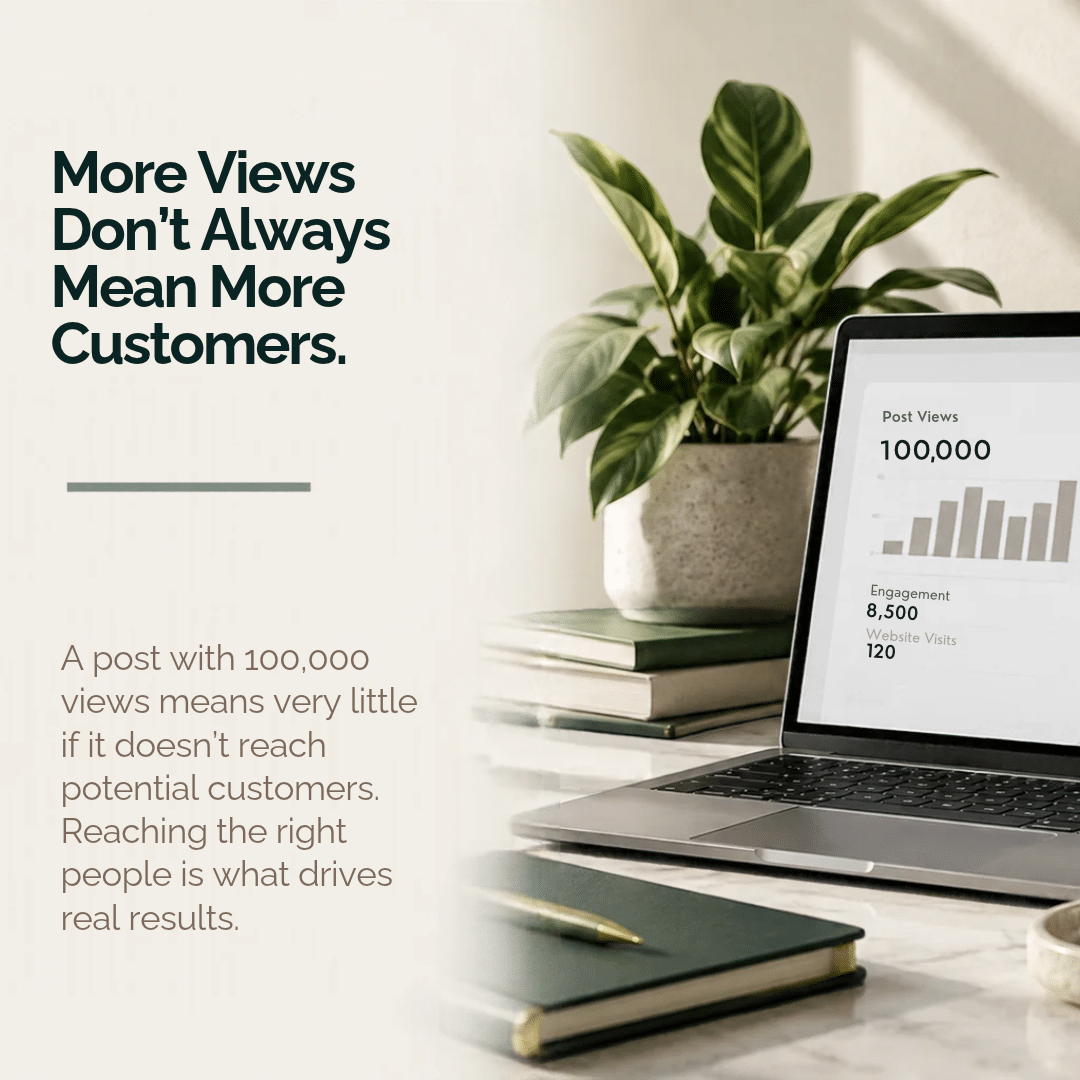
Let’s say you own an HVAC company and create a funny video that receives 100,000 views. People share it, comment on it, and engage with it. From the perspective of social media performance, that content appears to be a tremendous success. The platform rewarded it with distribution, and your company received more exposure than it typically would.
But what if most of those viewers live outside your service area? What if they have no interest in your services, don’t remember your company’s name, or have no reason to associate your business with the solution they might need in the future? The video created attention, but whether it created meaningful business value is another question.
Now imagine that same HVAC company creates a video explaining the warning signs that an air conditioner may need maintenance before the hottest part of summer. That video receives only 1,500 views, but most of those viewers are homeowners within the company’s service area. Some visit the website to learn more, a few schedule maintenance appointments, and others remember the company when they need service.
Which video was more successful? The answer depends on the objective, but if the goal was attracting qualified customers and generating service appointments, the second video may have produced considerably more value despite receiving a fraction of the views.
This is where I think marketers and business owners need to be careful about how they define success. The algorithm may help determine how widely content is distributed, but it cannot tell you by itself whether that attention is helping your business accomplish its goals.
A business does not necessarily need more people seeing its marketing. It needs more of the right people seeing its marketing and taking meaningful steps toward becoming customers.
The Algorithm Doesn’t Know What Your Business Is Trying to Accomplish
One of the biggest problems with allowing algorithms to drive marketing decisions is that these platforms do not understand your specific business objectives.
Instagram doesn’t know that your healthcare practice needs to increase appointments for a particular service. LinkedIn doesn’t know that your company is trying to reach decision-makers at established businesses within a specific geographic market. Google doesn’t know that your biggest challenge is not attracting website visitors but getting those visitors to schedule consultations. TikTok doesn’t know whether the people watching your videos are qualified prospects who need your services.
These platforms use algorithms to organize, rank, recommend, and distribute content based on their own systems and objectives. They analyze signals of relevance, behavior, engagement, and quality to decide what information to present to users. In many cases, those systems can be effective at connecting people with information they find useful.
But they are not responsible for understanding your revenue goals, identifying your most profitable services, evaluating your operational capacity, or determining where customers are getting stuck in the buying process. That responsibility belongs to your business and the marketing strategy supporting it.
If your business needs more qualified leads, marketing should be designed around attracting and converting qualified prospects. If you need to increase enrollment for an educational program, the strategy should focus on reaching prospective students and helping them understand why that program is the right choice. If a healthcare organization needs to grow a particular service line, marketing should consider patient needs, provider availability, geographic opportunities, and the questions people ask before scheduling an appointment.
Those business objectives should determine what the marketing needs to accomplish. From there, we can decide which channels, messages, content formats, and optimization techniques will best support that goal.
When we begin with what an algorithm wants instead of what our business needs, we risk allowing a distribution system to influence decisions that should be driven by our customers and business objectives.
Your Buyer Doesn’t Care About the Algorithm
Think about the last time you needed to hire a service provider or make an important purchasing decision. You probably weren’t thinking about whether the company had followed the latest social media recommendations or optimized its content according to a search engine update. You were trying to find information that would help you make a good decision.
Someone searching for a healthcare provider wants to know whether that provider offers the care they need, accepts their insurance, has convenient appointments, and has a reputation they can trust. A homeowner looking for a roofing contractor may want to understand the cost, evaluate the company’s experience, read reviews, and feel confident that the work will be completed correctly. A business owner researching marketing agencies wants to know whether an agency understands their challenges and can help improve results.
These people have questions, concerns, expectations, and motivations that influence their decisions. They need information that helps them evaluate their options and feel confident about what to do next.
They are not concerned about whether your content is optimized for the latest algorithm. They are concerned about whether your business can help them.
That is what good marketing should address. It should anticipate the questions people are asking, explain the value of what a business offers, demonstrate credibility, and make it easier for someone to take the next step.
The platforms matter because they can help people discover that information. But the information itself needs to be created for the person who will use it.
What Happens When We Start Marketing for Algorithms Instead of People?
The pressure to keep up with constantly changing platforms can slowly shift the way businesses approach marketing. Instead of asking what their audience needs to understand, they begin asking what type of content is getting the most engagement. Instead of focusing on the questions customers ask before buying, they spend more time discussing keywords, hashtags, trending topics, and content formats.
 Eventually, the marketing conversation becomes centered on the activity itself. How many times should we post? How long should our videos be? What is the best time to publish? Which platform is currently generating the most reach? What do we need to change because the algorithm changed?
These can all be legitimate questions, but they should come after we have established what the marketing is supposed to accomplish.
Consider a business that decides to invest heavily in short-form video because that format is receiving greater distribution on social media. Creating more videos might help the company reach new audiences, but what happens if its buyers are making complicated purchasing decisions that require detailed information, comparisons, case studies, and opportunities to speak with knowledgeable employees?
The business may succeed at generating awareness without giving prospective customers the information they need to move forward. It may attract thousands of viewers while failing to address the questions that prevent people from buying.
This is why marketing cannot be built around a single platform, format, or algorithm. Different customers need different information throughout their buying journey, and those needs rarely fit neatly into whatever type of content a platform happens to be promoting.
A strong marketing strategy considers how people discover a business, what they need to learn, how they evaluate their options, what builds trust, and what ultimately motivates them to act. The channels and content should work together to support that process.
What Would Happen If We Focused More on Understanding Our Buyers?
Instead of beginning our marketing conversations with algorithm updates, I would love to see more businesses begin by asking whether they truly understand the people they are trying to reach.
Who is your ideal customer? What is happening in their life or business that creates a need for your product or service? What questions do they ask when they first recognize that need? What concerns might prevent them from moving forward, and what makes them feel confident choosing one provider over another?
These questions should guide the foundation of our marketing strategy.
Understanding Who We Want to Reach
Not everyone who sees your marketing is a potential customer, and not every potential customer is necessarily the right fit for your business. Understanding your target audience means looking beyond broad demographic information and examining the needs, motivations, behaviors, and circumstances that influence their purchasing decisions.
A service-based business may need to reach homeowners within a specific geographic area who are likely to need particular services. A healthcare practice may want to attract patients for certain specialties while considering provider availability and scheduling capacity. An educational organization may need to connect with prospective students who have specific career goals, educational requirements, and financial concerns.
The better we understand these differences, the more effectively we can determine what messages will resonate and where those messages should appear.
This also helps us avoid spending resources trying to attract people who are unlikely to become customers. Reaching a smaller, more qualified audience can be more valuable than generating broad exposure among people who have little connection to what the business offers.
Understanding What Buyers Need Throughout Their Journey
The next step is understanding that people need different information depending on where they are in the buying process.
Someone who has never heard of your company may first need to understand that a problem exists or that a particular solution is available. Someone actively researching their options may need educational resources, comparisons, and examples that help them evaluate different approaches. Someone preparing to make a decision may want testimonials, reviews, case studies, pricing information, or reassurance about what will happen after they contact you.
Marketing should also continue after a purchase. Existing customers need communication, support, and reasons to maintain their relationship with the business. Positive experiences can lead to repeat purchases, referrals, reviews, and long-term customer loyalty.
When we understand these different stages, we can create content and choose channels that serve a specific purpose rather than simply trying to produce more activity.
A social media post might help someone discover your business. A blog post could answer a question they have during their research. Your website may explain your services and provide the proof they need to feel confident. Email marketing can maintain the relationship until they are ready to buy, while reviews, referrals, and in-person experiences reinforce trust.
The buyer doesn’t see these as separate marketing tactics. They experience them as interactions with your company, and those interactions should work together.
Understanding Where Buyers Look for Information
Once we understand the audience and their buying journey, we can make better decisions about where our marketing belongs.
Some customers begin their research on Google. Others ask questions through ChatGPT or another AI-powered tool. Some rely on recommendations from friends, family, or professional colleagues. Others use social media, industry publications, community organizations, events, or online reviews to learn about businesses.
In many cases, people use several sources before making a purchasing decision. They may first hear about a company at a networking event, visit its website a few days later, read reviews, see its content on LinkedIn, and eventually reach out when they are ready to discuss their needs.
This is why I believe marketing needs to be connected across channels rather than managed as a collection of disconnected activities. The goal is not simply to be present everywhere. It is to understand which interactions matter to the audience and make sure the business provides useful, consistent information throughout the process.
Only after we understand those behaviors should we begin discussing how algorithms influence visibility on the platforms we have chosen.
Does This Mean We Should Ignore Algorithms?
Absolutely not. Understanding how search engines, social media platforms, and AI-powered discovery systems work is an important part of modern marketing. These systems influence whether information can be found, how prominently it appears, and which audiences are likely to encounter it.
If Google changes how it evaluates or presents search results, we need to understand the potential impact on our clients. If LinkedIn changes how content is distributed, we should evaluate what those changes mean for our audience and objectives. If AI-powered search changes how people research businesses and compare options, we need to adapt our approach to make sure useful information remains discoverable.
We should also recognize that creating excellent content doesn’t automatically guarantee visibility. Even content that answers meaningful customer questions can struggle to reach its intended audience because of competition, technical limitations, poor distribution, or changes in platform behavior.
Algorithms matter because they are part of how our marketing reaches people. Optimizing content for discovery, testing different formats, reviewing performance data, and adapting to changes are all legitimate marketing responsibilities.
But there is a difference between understanding how an algorithm works and allowing that algorithm to dictate your marketing strategy.
We should use our knowledge of platforms to improve how our messages reach the intended audience. We should not allow platform recommendations to determine who our audience is, what problems we address, what information we create, or how we define business success.
Those decisions need to come from a much deeper understanding of the business and its customers.
Good Marketing Should Outlast the Next Algorithm Update
Algorithms are going to continue changing. New platforms will emerge, existing platforms will evolve, and AI will continue influencing how people discover information and evaluate businesses. As marketers, we will need to keep learning and adapting because the ways we reach our audiences will never remain completely static.
However, if your entire marketing strategy depends on what a particular platform is rewarding today, you will constantly be reacting to decisions outside your control. Every update becomes another reason to change direction, produce different content, or reconsider your approach.
That isn’t a particularly stable foundation for growing a business.
When your marketing strategy is built around understanding your audience, communicating your value, and supporting the buying journey, you have something more durable. You can adapt to changes in search engines, social media platforms, and AI-powered discovery without losing sight of what your marketing is supposed to accomplish.
You may change the format of a piece of content or the way you optimize a website. You may shift resources between channels as audience behavior changes. You may even discover new opportunities to reach people that didn’t exist a few years earlier. Those adjustments are part of effective marketing, but they should support a consistent strategic purpose rather than replace it.
I think we would all benefit from spending a little less time obsessing over what the next algorithm update means and a lot more time understanding the people we are trying to reach.
Because at the end of the day, our job is not to make Google happy, satisfy Instagram, or figure out how to get LinkedIn to give us more impressions. Our job is to connect businesses with people who need what they offer, help those people make informed purchasing decisions, and turn those connections into meaningful business results.
The algorithm is a tool for reaching the buyer. The buyer is the reason we are marketing in the first place.
And I think it’s time we started putting our attention back where it belongs.
Is Your Marketing Focused on Your Buyers or Just Keeping Up With the Platforms?
We believe marketing should begin with the business problem you are trying to solve, not the latest algorithm update or marketing trend. We start by understanding your business, identifying the audiences you need to reach, and evaluating what those people need throughout their buying journey.
From there, we develop a connected marketing strategy that brings together the channels, messaging, content, and measurement needed to support your goals. Instead of choosing marketing tactics simply because they are popular, we focus on how each activity contributes to reaching the right people, building trust, generating qualified opportunities, and supporting business growth.
If your marketing feels like a constant race to keep up with changing platforms, it may be time to look beyond the algorithms and ask whether your strategy is truly built around your buyers.