What Did 2026 Teach Us About Social Media Marketing,
and What Comes Next?

Social media marketing has changed considerably over the years, but 2026 has brought some important shifts in how people discover businesses, research products and services, and decide which brands they want to trust.
Social platforms are no longer simply places where businesses publish updates and hope their followers see them. They have become search engines, research tools, customer service channels, and important touchpoints throughout the buyer’s journey.
At the same time, algorithms are placing greater emphasis on relevant, original content, making it harder for businesses to rely on follower counts, posting frequency, or the latest content trend to determine success.
For business owners, the challenge is understanding which changes actually matter and how to respond without constantly rebuilding their marketing strategy. Recent 2026 research from Sprout Social, Socialinsider, and other industry sources provides useful insight into how social media is evolving. But the bigger question isn’t simply what the platforms are doing differently. It’s how businesses should adapt their marketing to better connect with the people they want to reach.
Social Media Is Becoming a Search and Research Platform
One of the most significant developments in 2026 is the continued growth of social media as a place where consumers actively search for information. 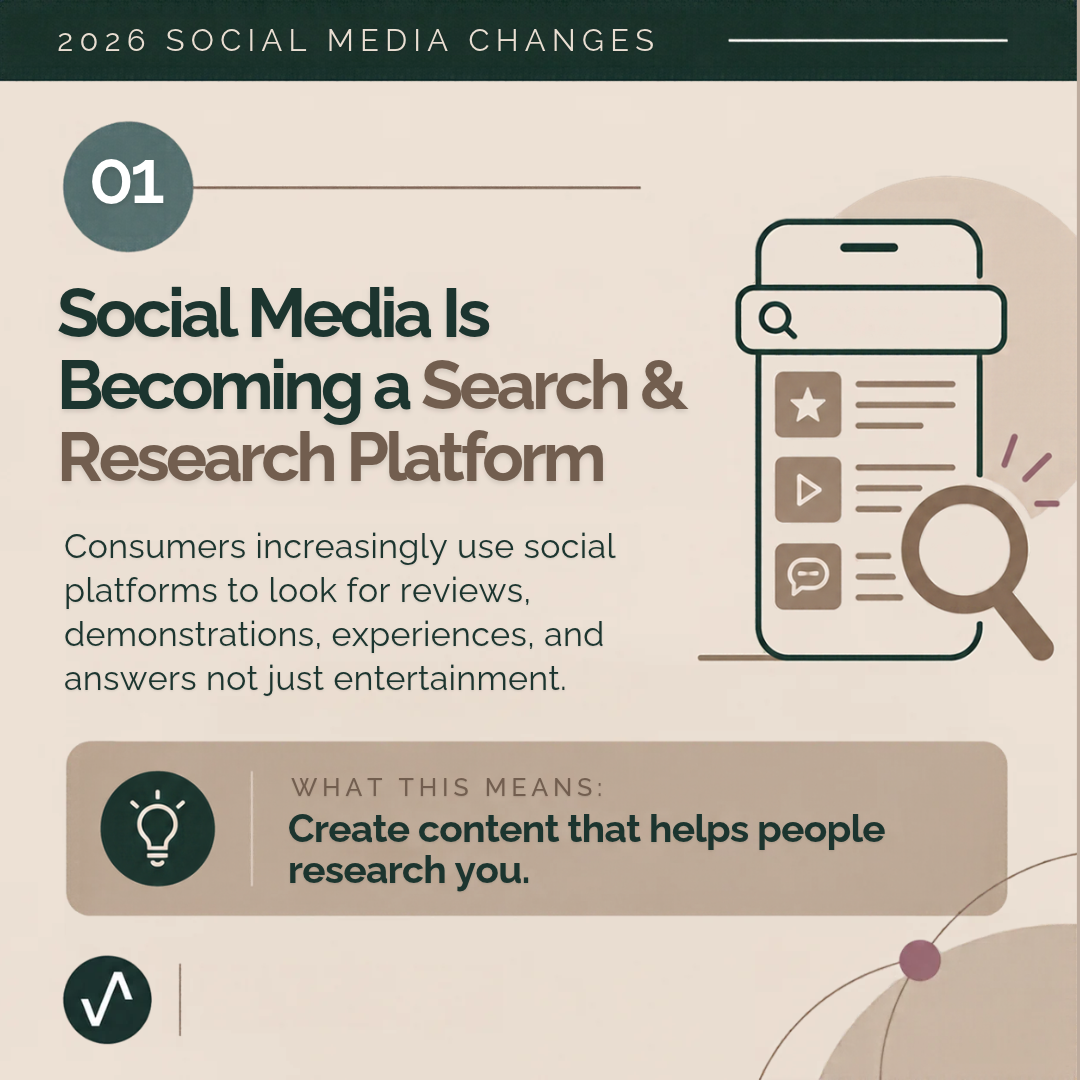 According to Sprout Social’s June 2026 research, platforms such as Facebook, YouTube, TikTok, and Instagram have become important destinations for social search. People are using these platforms to find product recommendations, learn about businesses, watch demonstrations, read reviews, and hear about other customers’ experiences.
This changes the role social media plays in the buying process. Someone considering a new service provider might search Google to identify local businesses, visit social media to see examples of their work, read customer comments, and then return to the website when they’re ready to make contact. Another customer might discover a business through a helpful video before they even realize they need its services.
Businesses need to think beyond creating content that appears in someone’s feed. They should also consider whether their social media content helps potential customers find answers to the questions they are already asking. Clear descriptions, relevant keywords, educational videos, customer experiences, and useful explanations can make social profiles more valuable during the research process.
This is also why social media should not operate separately from search engine optimization, website content, and the rest of a company’s marketing. Different channels may introduce customers to a business at different points in their decision-making process. The goal is to create a consistent experience that helps people move from discovering a business to understanding why they should consider it.
Relevance Is Becoming More Important Than Follower Count
For years, businesses have treated follower growth as one of the primary indicators of social media success. While followers still matter, the way platforms recommend content has changed how businesses can reach new audiences.
Interest-based recommendations allow content to reach people who have never followed a particular business. Instead of relying exclusively on an established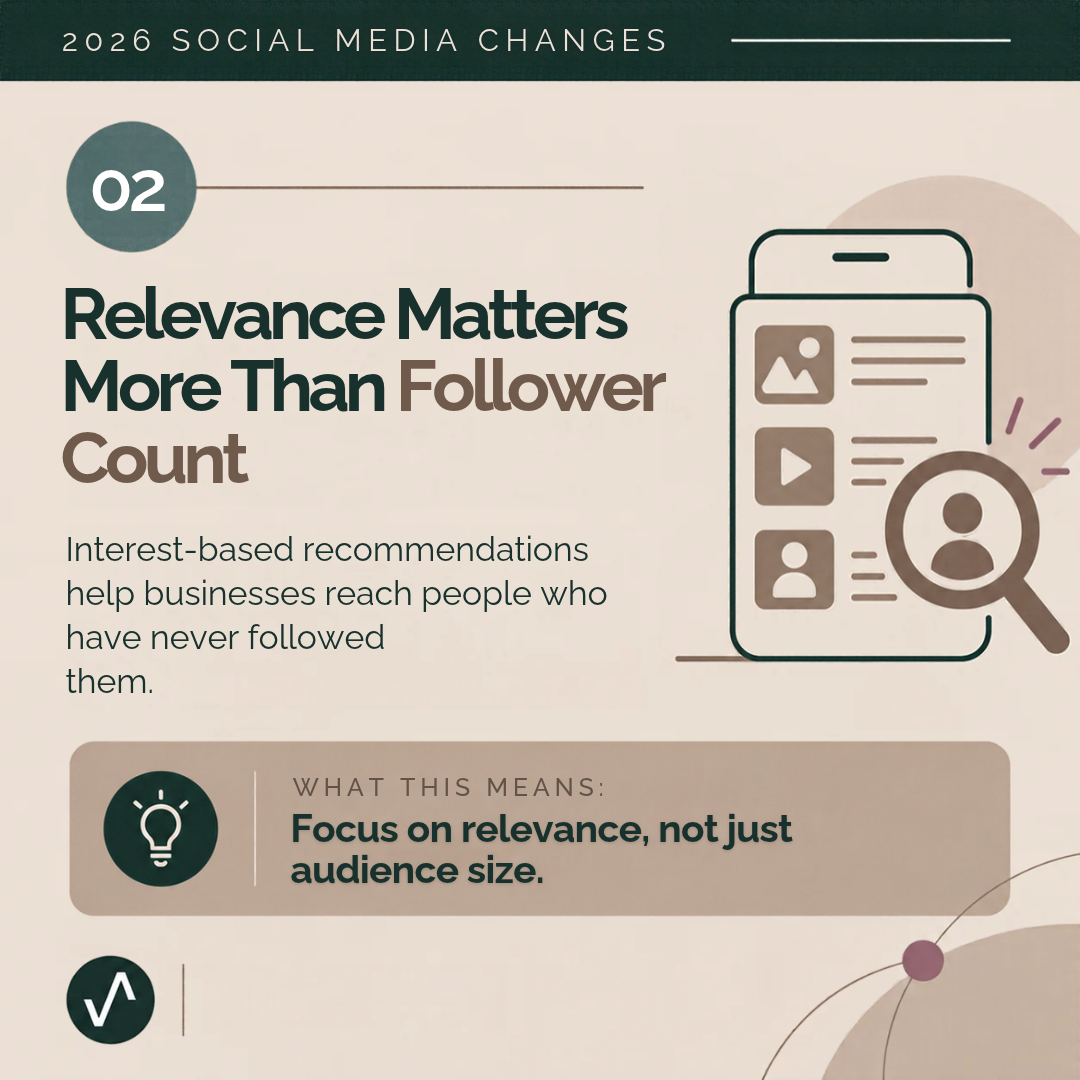 follower network, platforms can introduce content based on what users watch, search for, interact with, and demonstrate an interest in. Sprout Social’s 2026 Content Strategy Report reinforces the importance of understanding audience preferences rather than simply producing more content.
For businesses, this creates an opportunity to reach people outside their existing communities. A company with a relatively small following may still introduce its expertise to potential customers when its content addresses something relevant to their interests or needs. However, reaching more people does not automatically mean reaching the right people.
This distinction is especially important when evaluating social media performance. A post that receives thousands of views from people who are unlikely to become customers may contribute less to a company’s goals than a post that reaches a smaller, more qualified audience. Businesses should look at who is engaging, what interests them, and whether those interactions support the outcomes they are trying to achieve.
We’ve discussed this distinction in our article, Tired of Chasing Algorithms? Focus on Your Buyers Instead. The central point is that businesses should not build their entire content strategy around what an algorithm appears to favor. They should first understand their audience, what motivates them, and what information helps them make purchasing decisions.
Short-Form Video Still Matters, but It Isn’t Always the Best Content Format
Short-form video continues to play an important role in social media marketing, but one of the more useful lessons from 2026 research is that no single content 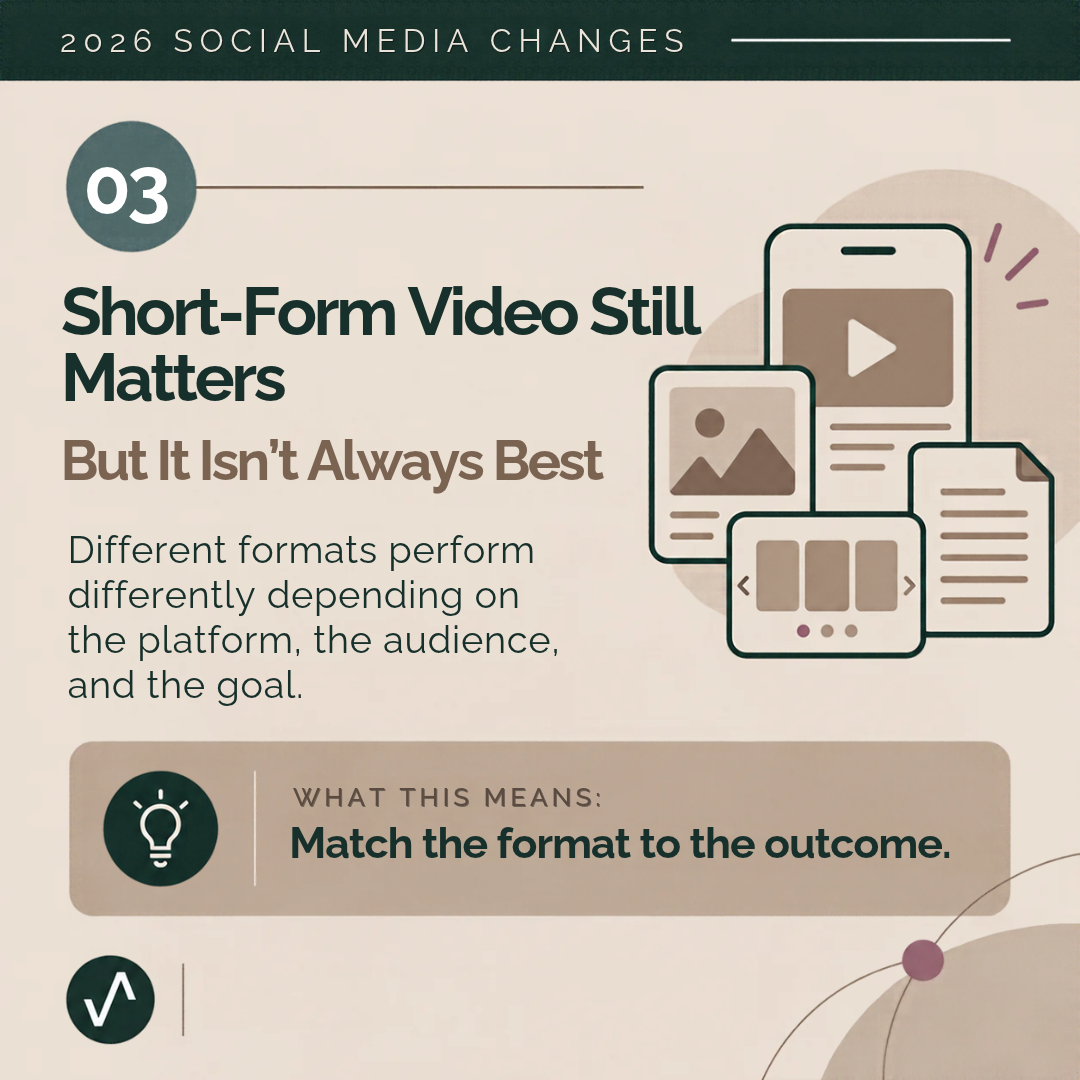 format consistently performs best across every platform or business objective.
Socialinsider’s October 2026 research analyzed 62.7 million social media posts published between January and September 2026 across Instagram, Facebook, LinkedIn, and X. The findings demonstrate that performance varies by platform, audience size, content format, and whether a business is measuring engagement or visibility.
Instagram carousels, Facebook Reels, and LinkedIn document or multi-image posts can each offer advantages depending on the metric being evaluated. This is an important distinction because a format that generates strong engagement may not be the same format that delivers the greatest number of impressions.
Businesses should avoid assuming that they need to turn every message into a short video simply because video is popular. A professional services company explaining a complicated decision might find that an educational carousel helps its audience understand the topic. A home service business may benefit from video demonstrations that show the quality of its work. An organization promoting an event might use a combination of video, graphics, testimonials, and informational posts to move people from awareness to registration.
The right format should depend on the message, the audience, and what the business wants someone to do after seeing the content.
Testing different formats and evaluating the results is more useful than automatically adopting whichever content type is currently receiving the most attention.
Original Content Is Becoming More Valuable as AI-Generated Content Increases
Artificial intelligence has made it easier for businesses to produce written content, images, videos, and social media posts.
While these tools can improve efficiency, they also create a challenge: when businesses rely too heavily on similar AI-generated content, their messages can begin to look and sound interchangeable.
Sprout Social’s 2026 research on original content found that consumers place considerable value on human-created content. Its research also reported that only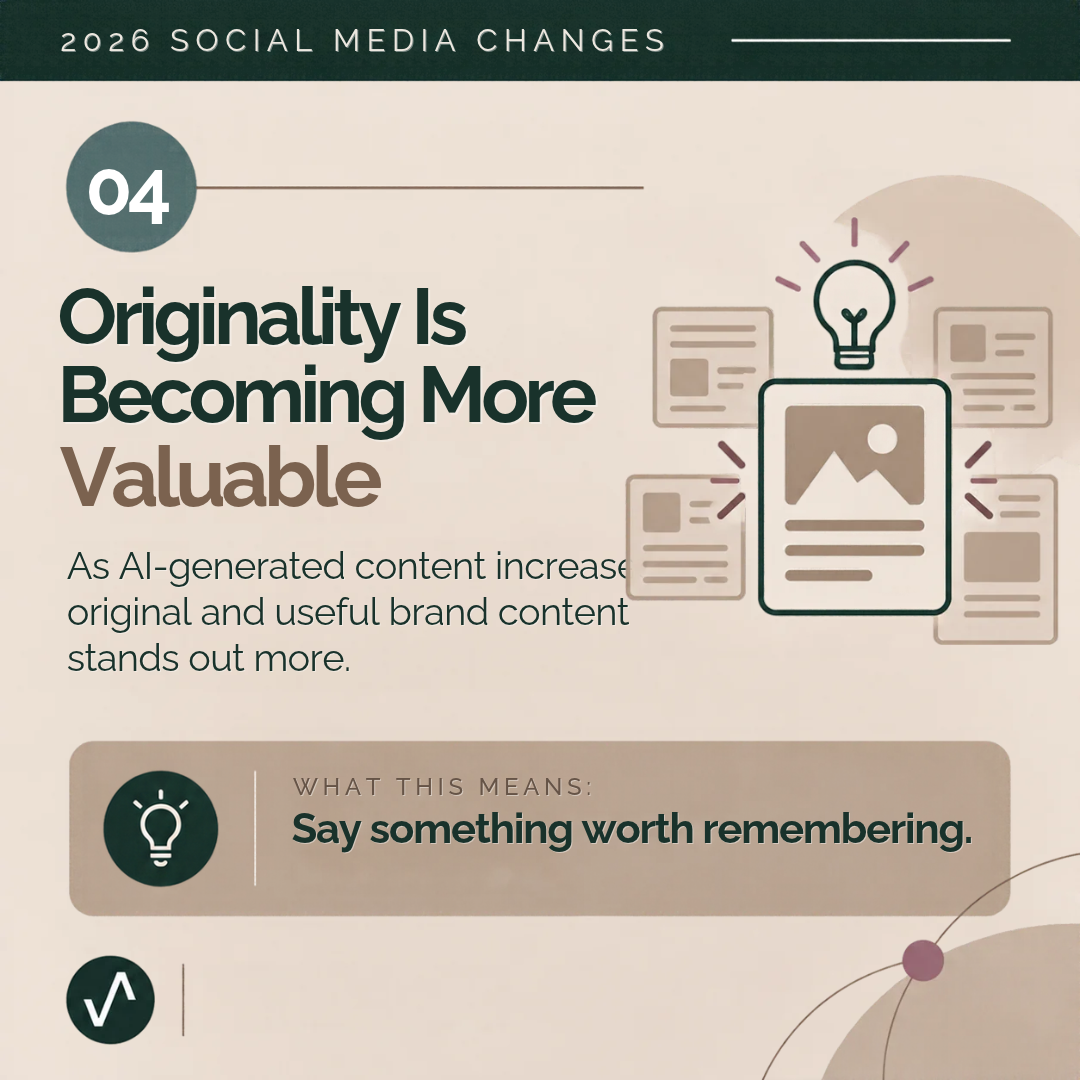 56% of social media users believe brands do a good job producing genuinely original content.
The issue isn’t necessarily whether a business uses AI. It’s whether the content provides something meaningful that audiences cannot get from dozens of other businesses sharing nearly identical messages.
Original content can come from a company’s experience, expertise, customer questions, unique perspective, or the lessons it has learned while doing its work. A business owner explaining a common misconception, a technician demonstrating how something works, or a marketing professional sharing an informed perspective on industry research can provide value that goes beyond generic tips.
Social media platforms are also taking steps to reward originality. Meta announced changes in March 2026 intended to give original creators greater visibility on Facebook. This reinforces the importance of developing content that contributes something new rather than simply republishing material that already exists.
This connects to a larger marketing principle we’ve discussed in our article, Tired of Chasing Algorithms? Focus on Your Buyers Instead. A business doesn’t need to manufacture a new personality for every platform or follow every trending topic. It needs to understand what makes its experience valuable and communicate that in ways its audience can relate to.
AI can support research, organization, editing, and production, but businesses should be careful not to automate away the knowledge, perspective, and personality that make their content worth paying attention to.
Social Media Is Also a Customer Service and Relationship Channel
Another important development in 2026 is the growing expectation that businesses will use social media for more than publishing content. Customers increasingly use social platforms to ask questions, communicate concerns, request information, and interact directly with companies.
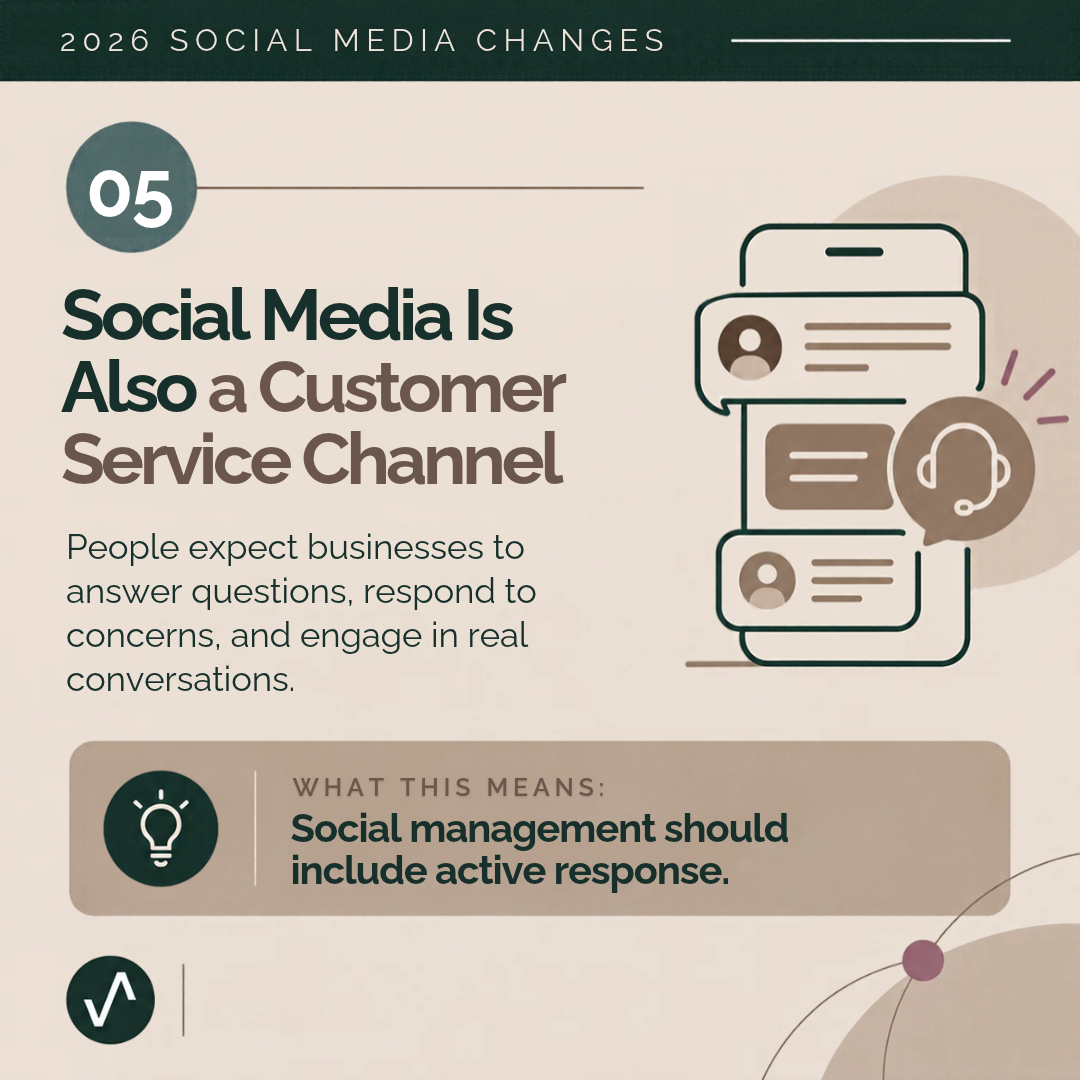 Sprout Social’s September 2026 consumer research found that 55% of consumers preferred sending a private message to a company rather than making a public complaint. The research also reported that 68% expected businesses to respond within 24 hours.
These findings have important implications for how businesses manage their social media presence. Publishing regularly is only one part of the responsibility. Someone also needs to monitor messages, respond to comments, answer questions, and make sure customer concerns reach the appropriate person.
Consider a potential customer who sees a social media post and sends a message asking about availability, pricing, or services. If that message goes unanswered for several days, the business may lose an opportunity that its marketing helped create. The same is true when an existing customer reaches out with a concern and receives no response.
Social media management should therefore connect with customer service, sales, scheduling, and internal communication processes. Businesses need to establish who is responsible for responding, how quickly responses should happen, and what the next step should be when someone expresses interest.
This is another example of why marketing cannot be evaluated solely by the content a business publishes. The experience someone has after interacting with that content can be just as important as the post itself.
What These Changes Mean for Your Social Media Strategy
When we look at these developments together, a clear pattern begins to emerge. Social media is becoming more integrated into how customers discover, evaluate, and build relationships with businesses. At the same time, producing more content or accumulating more followers is not necessarily enough to create meaningful business results.
A business may need to rethink how its content supports the entire buyer’s journey. Some posts should introduce the business to people who have never heard of it. Others should answer questions, demonstrate expertise, address concerns, or help potential customers compare their options. Content can also reinforce relationships with existing customers, encourage repeat business, and give people reasons to recommend the company to others.
This is why it’s important to measure more than reach, impressions, and engagement. Those metrics help businesses understand whether content is being seen and how people are interacting with it, but they do not tell the complete story.
In our article, Marketing Attribution Is Getting More Complicated. Are We Measuring What Really Matters?, we explore why businesses need to look at how their marketing efforts work together instead of assigning all the credit to one channel. Someone may discover a company on social media, research it through Google, read several articles, and contact the business weeks later. Social media may have played an important role even if it wasn’t the final interaction before the inquiry.
Businesses should evaluate social media through a combination of platform-specific performance, audience engagement, website behavior, qualified inquiries, customer conversations, and overall business outcomes. The most useful measurements depend on what role social media is expected to play in the company’s marketing strategy.
The Biggest Social Media Lesson From 2026: Focus on Your Customers, Not Just the Platforms
The research from 2026 shows that social media will continue to evolve. People are searching differently, discovering businesses beyond their existing networks, engaging with different content formats, and expecting more meaningful interactions with the brands they follow.
Artificial intelligence is also changing how content is created, making originality and genuine expertise increasingly important.
But none of these developments changes the foundation of effective marketing. Businesses still need to understand who they are trying to reach, what those people care about, how they make decisions, and what will help them feel confident choosing a particular company.
Instead of asking whether you should post more videos, join another platform, or change your content to satisfy the latest algorithm, start by asking whether your social media strategy is helping the right people discover your business, understand your value, and take the next step when they’re ready.
The businesses that benefit most from social media won’t necessarily be the ones that follow every trend. They’ll be the ones that understand how to use social media as part of a connected marketing strategy that supports their customers and their business goals.
What Do We Predict for Social Media Marketing in 2027?
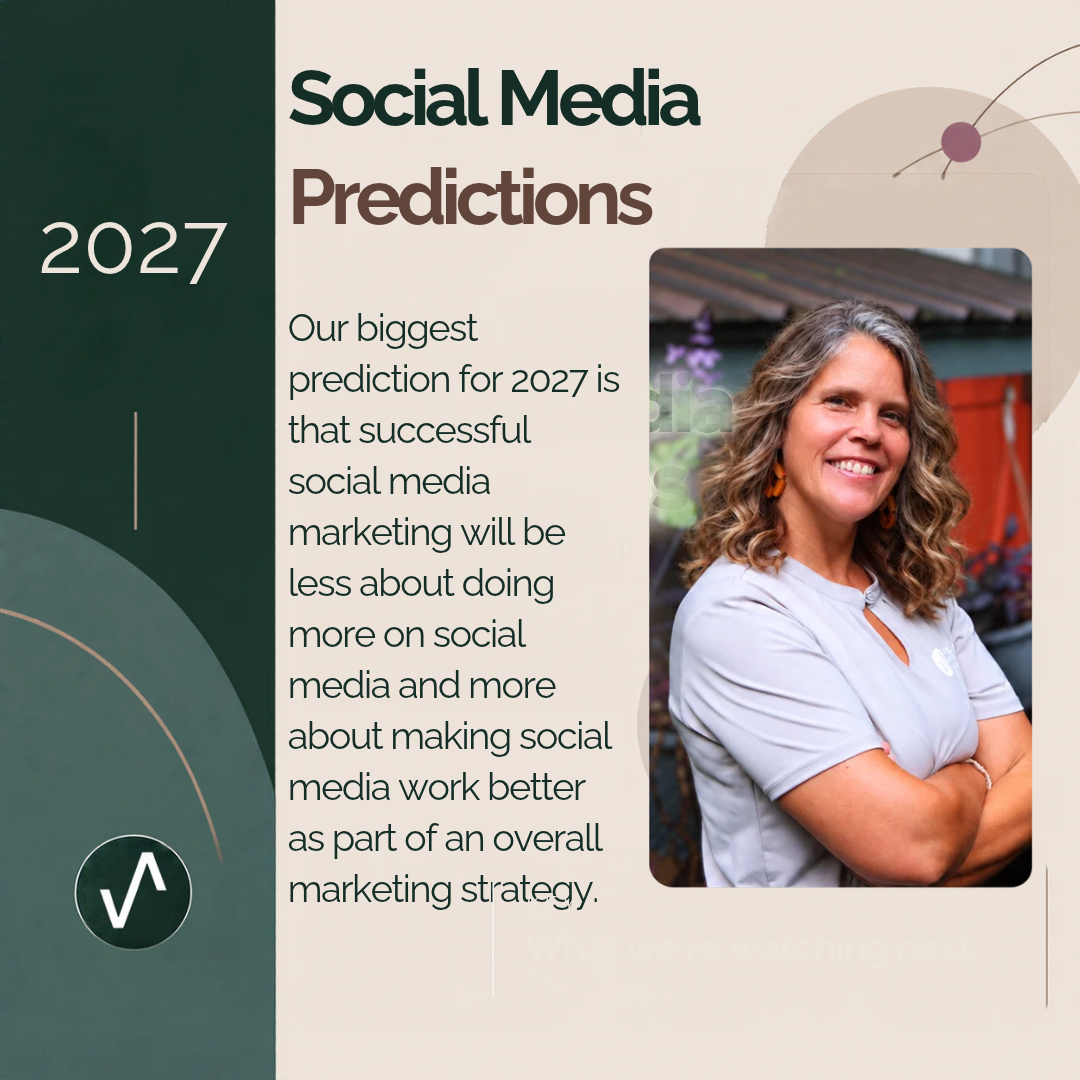 Looking ahead to 2027, we believe social media will continue moving away from being simply a place where businesses publish content and toward becoming a more important part of how customers discover, research, evaluate, and interact with brands. We are already seeing this shift in how platforms recommend content based on interests rather than just who someone follows, and in how consumers use social media to ask questions, compare options, and learn about businesses before making decisions. Our prediction is that businesses will need to think more carefully about who they are trying to reach, what those people need to know, and how their content helps move them through the buying process. That may mean creating fewer posts simply to maintain a publishing schedule and investing more effort in useful, relevant content that answers customer questions, demonstrates expertise, and builds confidence in the business.
We also believe originality and trust will become even more important as AI makes it easier for businesses to produce large amounts of content. In fact, Forrester’s 2027 predictions point toward a growing emphasis on human expertise, authentic content, and evidence-backed claims.
We expect businesses that can communicate their unique perspective, demonstrate real experience, and engage in meaningful conversations with customers to have an advantage over those producing generic content just to stay visible. And while reach, engagement, and followers will still tell us something, we believe businesses will need to look more closely at how social media contributes to search visibility, website visits, inquiries, customer relationships, and ultimately business growth. Our biggest prediction for 2027 is that successful social media marketing will be less about doing more on social media and more about making social media work better as part of an overall marketing strategy.